Few things can disrupt your tax filing like finding out someone else has already claimed your child on their return. Whether it’s the result of a simple mistake or a contentious custody situation, this issue can cause delays, lost refunds, and plenty of stress. Understanding what happens in these situations, and how to resolve them, is critical for getting your tax return back on track.
Common Reasons This Happens
When more than one person attempts to claim the same child on their tax return, the cause is usually one of a few recurring scenarios—some unintentional, others more complex.
Misunderstandings
In many cases, someone else claiming your child may simply be the result of an honest mistake. A grandparent, relative, or even an ex-spouse might believe they are eligible to claim the child based on past arrangements or outdated agreements. Sometimes, two people alternate years claiming the same child, and one person may accidentally claim them during the wrong year.
Custody Disputes
In other instances, the situation is more complex. Parents who are separated or divorced might disagree on who has the right to claim the child. Even if a legal agreement is in place, one party may disregard it and file the return anyway. They may do this assuming they can sort it out later.
There are also more serious cases where someone intentionally claims a child they are not eligible for. For example, they may want to boost their refund through the Child Tax Credit or Earned Income Tax Credit. This is considered tax fraud and can carry penalties.
Overlapping Support
Another reason this happens is when multiple people financially support or house a child throughout the year. For instance, let’s say a child splits time between a parent and a grandparent. Each may believe they meet the IRS requirements to claim the child even though only one is entitled to.
How the IRS Handles Duplicate Claims
Once the IRS system detects that more than one return has claimed the same dependent, a series of automatic and manual processes are triggered to flag and investigate the issue.
E-file Rejection
If someone has already claimed your child, and you attempt to file an electronic tax return claiming that same child, the IRS will reject your return. The system only allows one return per Social Security Number (SSN) for dependents. This rejection acts as a safeguard against duplicate claims. The IRS will not tell you who claimed the child due to privacy laws. However, you’ll know something is wrong if you receive a rejection notice related to a dependent’s SSN.
Filing a Paper Return
When your e-filed return is rejected, the next step is to file your tax return by mail. By submitting a paper return that claims the child, you are asking the IRS to investigate the situation. You will need to complete your return as usual and ensure all supporting documents are attached. Once the IRS receives your paper return, they will compare it with the previously filed return that also claimed the child.
IRS Review and Audit
After receiving both returns, the IRS will begin a review process to determine who is entitled to claim the child. This review can take several months. During this time, the IRS may send letters to both parties requesting documentation to support their claim. If both parties continue to claim the child and no resolution is reached, the IRS may initiate an audit. In this case, both individuals must provide proof that they meet the IRS requirements for claiming the child as a dependent.
IRS Final Decision
If both parties appear eligible or if there is no documentation to support either claim, the IRS will apply tie-breaker rules. These rules are based on relationship, residency, and income, which we’ll cover in more detail below.
How the IRS Determines Who Can Claim the Child
When two taxpayers claim the same child, the IRS follows strict eligibility rules and tie-breaker logic to determine who has the legal right to do so.
IRS Qualifying Child Requirements
To claim a child as a dependent, the IRS requires that the child meet specific criteria. The child must be your son, daughter, stepchild, foster child, sibling, half-sibling, or a descendant of any of them. The child must be under age 19 (or under 24 if a full-time student). They must also live with you for more than half the year.
In addition to the relationship and residency tests, you must provide more than half of the child’s financial support during the year. The child also must not file a joint return unless they are only doing so to claim a refund.
Tie-Breaker Rules in Contested Claims
If multiple taxpayers claim the same child, and neither withdraws their claim, the IRS will apply tie-breaker rules. Preference is given first to the parent if one is a parent and the other is not. If both are parents, the child goes to the one with whom the child lived the longest during the year. If the child spent equal time with both, the parent with the higher adjusted gross income (AGI) wins the claim.
For example, say a mother and grandmother both claim the same child, and the child lived with both for roughly equal time. The IRS would typically award the claim to the mother, assuming both meet other qualifications. If both are parents, and the child lived equal time with each, the higher-income parent wins the right to claim the child.
How Long Does It Take to Resolve?
The process of resolving a duplicate dependent claim is far from instant. It involves careful review, potential audits, and extended processing timelines.
Processing Time
The entire process of resolving a duplicate dependent claim can take several months. Once you submit a paper return, the IRS must manually review and compare it to the return that already claimed the child. This process is slower than normal tax return processing and may result in significant refund delays.
If the IRS requires additional documentation from you, they will send you a notice with specific instructions. Failing to respond to these notices in a timely manner can delay the process even further. It may also result in your claim being denied by default.
Refund Holds
While your case is being reviewed, your refund will be placed on hold. You can track the progress of your return using the IRS’s “Where’s My Refund?” tool, However, updates may be infrequent if the case is under special review or audit.
What If the Other Person Claimed Your Child Fraudulently?
If you suspect someone intentionally and fraudulently claimed your child to benefit from credits or a larger refund, it’s important to take action quickly.
Recognizing Tax Fraud
If you suspect that someone intentionally claimed your child to receive credits or inflate their refund, you may be dealing with tax fraud. This is common in situations where the person claiming the child has no legal right or relationship with the child. This might happen when a distant relative, acquaintance, or even someone with access to personal information uses your child’s SSN to claim a refund.
Reporting Fraud to the IRS
To report suspected tax fraud, you can file Form 3949-A with the IRS. This form allows you to provide as much information as possible about the person who may have filed a fraudulent return. The IRS does not provide updates on these investigations due to privacy laws. However, the report can trigger an internal review.
You may also contact the IRS Identity Protection Specialized Unit if you believe your child’s SSN has been compromised. In cases of identity theft, the IRS may assign you and your child an Identity Protection PIN (IP PIN). This will add security in future tax years.
Preventing This in the Future
Once you’ve experienced this issue, it’s natural to want to do everything possible to make sure it doesn’t happen again.
Communication and Legal Agreements
In many cases, issues like this can be avoided with clear communication and formal agreements. If you’re separated or divorced, make sure your custody and tax arrangements are clearly spelled out in a court order or divorce decree. If the decree allows you to claim the child, keep a copy on hand in case the IRS requests it.
File Early
Filing your tax return early each year can reduce the likelihood of someone else claiming your child before you do. The IRS processes the first return it receives, and any subsequent claims are flagged for review. Keeping thorough records of your child’s residency, support, and school attendance can also make it easier to resolve any disputes that arise.
Use an Identity Protection PIN
For added protection, you can request an Identity Protection PIN (IP PIN) from the IRS. This six-digit number must be entered on your tax return and prevents others from filing using your or your child’s SSN. IP PINs are renewed each year and can be requested through the IRS’s website.
Tax Help for Parents
Discovering that someone else claimed your child on their tax return can be frustrating. However, there is a clear process in place to resolve the situation. If your return has been rejected or delayed because of a duplicate dependent claim, act quickly, stay organized, and be prepared for the timeline involved. With the right documentation and persistence, you can correct the issue and ensure your child is properly claimed on your return. If you’re unsure what to do next or need help navigating the IRS process, getting professional tax help can make all the difference. Optima Tax Relief is the nation’s leading tax resolution firm with over a decade of experience helping taxpayers.
Tax season is officially here. As you prepare to file your tax return, it might be helpful to research ways to decrease your tax liability. A popular way to do this is to claim tax credits and tax deductions. While both can help reduce your overall tax liability, they operate in distinct ways. In this article, we’ll break down the fundamental differences between tax credits and tax deductions, helping you understand how each can impact your financial situation.
What is a tax credit?
A tax credit is a dollar-for-dollar reduction of your income. They are created by the federal and state governments to encourage certain behaviors that benefit the economy or environment. For example, there is a solar tax credit available to taxpayers who purchase solar panels for their home. In 2025, it’s worth 30% of your total solar installation cost through 2032. There is also a federal adoption tax credit that helps offset 50% of your adoption costs. These credits reward behaviors that the government deems beneficial to society.
How do tax credits reduce my tax bill?
As mentioned, a tax credit is a dollar-for-dollar reduction of your income. Let’s say your tax liability is $1,000 but you are eligible for a $750 tax credit. This would reduce your tax liability to $250. There are two main types of credits: refundable and nonrefundable. Refundable credits allow you to receive the full amount of the credit, even if it exceeds your tax liability. For example, if your tax bill is $1,000 and you claim $1,200 in refundable tax credits, you will receive a $200 refund. Nonrefundable credits do not have the same perk. If those same tax credits are nonrefundable, you would simply owe $0 and would not receive the additional $200 in your tax refund.
However, there is also a partially refundable tax credit that offers a sort of middle ground. This type of tax credit allows taxpayers to receive a refund for a portion of the credit amount even if the credit exceeds their tax liability. For example, the American Opportunity Tax Credit allows you to claim up to $2,500 for qualified education expenses. However, only $1,000 of the credit is refundable. This means you can either reduce your tax liability by $2,500 or receive up to $1,000 in a tax refund if your total liability is less than the credit amount.
What is a tax deduction?
A tax deduction is a reduction of taxable income to lower your tax bill. You can lower your tax bill through deductions using one of two methods: claiming the standard deduction or itemizing your deductions. The standard deduction is a fixed dollar amount determined by the IRS each year that can be subtracted from your taxable income. Itemizing your deductions is more work and requires substantiation. However, it allows you to deduct expenses like student loan interest, mortgage interest, retirement contributions, medical expenses, investment losses and more.
How do tax deductions reduce my tax bill?
Any taxpayer can claim the standard deduction. In fact, most taxpayers do because it results in a lower tax liability. The standard deduction for single filers is $15,000 in 2025. This means that if you are a single filer with a taxable income of $50,000, you can take the $15,000 standard deduction. Doing so would reduce your taxable income to $35,000. If you itemize deductions, you will need to tally up all your eligible expenses on Schedule A of Form 1040. This typically only makes sense to do if you have enough expenses to exceed the standard deduction.
For example, if last year you had a lot of medical expenses, paid a lot of mortgage interest, or incurred disaster losses that were not insured, itemizing might be the best option for you. Finally, there is something called an above-the-line deduction, which is essentially a deduction that you can take to decrease your tax bill even further after taking the standard deduction. You can calculate these using Schedule 1 on Form 1040. Some examples are retirement contributions, HSA contributions, self-employment tax, health insurance premiums for self-employed, business expenses, and student loan interest.
Tax Relief During Tax Season
The bottom line is that both tax credits and deductions can help lower your tax bill. Many taxpayers may wonder which is better. Tax credits have a slight edge since they directly reduce taxes dollar-for-dollar whereas tax deductions will depend on your marginal tax bracket. Understanding these differences is crucial for effective tax planning and optimizing your financial situation. Figuring out how to file your return yourself can be tricky and intimidating. Consider consulting with a tax professional to ensure you take full advantage of available deductions and credits based on your unique circumstances. Our team of qualified and dedicated tax professionals can help.
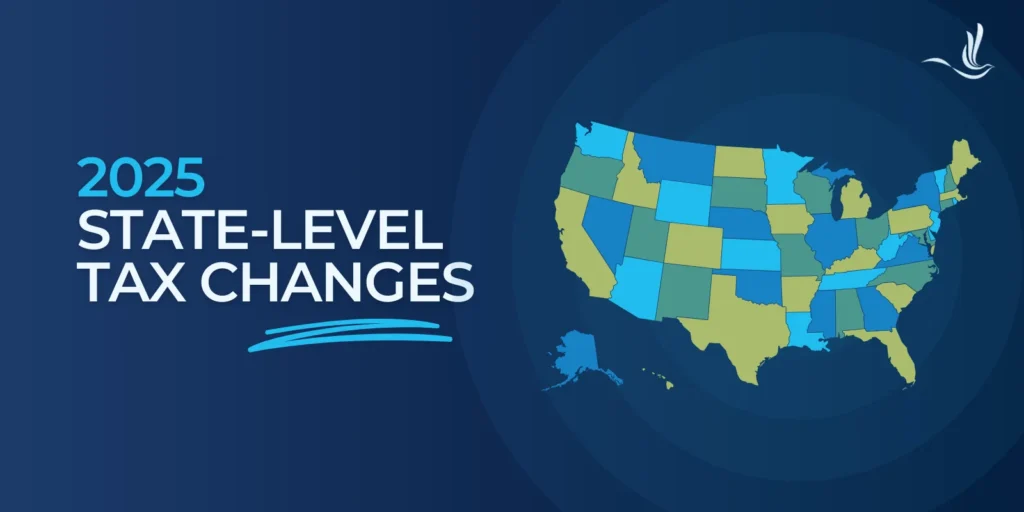
State tax systems are seeing major changes in 2025, with many states adopting flat income taxes, cutting corporate rates, and adjusting sales tax policies. These reforms aim to simplify tax codes, reduce burdens, and boost economic growth. In this article, we’ll highlight the most significant state-level tax changes, explore key trends, and look at how tools like artificial intelligence are shaping the future of tax policy.
Overview of 2025 State Tax Changes
A clear shift is taking place in how states approach taxation. Among the most notable trends is the widespread adoption of flat tax systems, along with targeted reductions in both individual and corporate income tax rates.
The Shift Toward Flat Tax Systems
A flat tax system imposes a single income tax rate on all taxpayers, regardless of income level. This differs from a progressive tax model, where rates increase as income rises. The move toward flat taxes is driven by several motivations:
Economic Growth: Simpler tax systems are thought to encourage investment, consumption, and relocating to lower-tax states.
Administrative Efficiency: Flat taxes are easier for both taxpayers and state agencies to administer.
Political Popularity: Lower and flatter tax rates appeal to state residents.
States Leading the Flat Tax Movement
Iowa: Iowa plans to move to a 3.9% flat tax by 2026. The state expects this move to reduce tax complexity for residents and improve their business climate.
Louisiana: Louisiana plans to move to a flat 3% tax rate in 2026.
Arizona: Arizona implemented a 2.5% flat tax in 2023, among the lowest in the U.S.
Mississippi: Mississippi has a flat tax rate of 4.4% and has plans to eliminate it completely by 2040.
Georgia: Georgia reduced its state tax rate to a flat 5.39%.
North Carolina: North Carolina has gradually decreased its tax rate and will continue to do so until it reaches 3.99% in 2027.
Benefits of Flat Tax Reforms
Flat tax reforms benefit taxpayers by providing a much simpler approach to state tax filing, more predictable tax planning and potential savings for middle- and upper-income taxpayers. There are also several benefits for the state. For example, it gives them a competitive advantage in attracting new businesses and residents and encourages long-term economic growth. It also provides administrative efficiency.
Individual Income Tax Changes
Several states are cutting individual income tax rates or restructuring their brackets. These changes are aimed at giving residents more financial flexibility and boosting state economies.
States Cutting Individual Income Tax Rates
On January 1, 2025, nine states implemented individual income tax cuts:
Indiana: Reduced income tax rate from 3.05% to 3%
Iowa: Changed from a progressive tax rate of up to 6% to a flat tax rate of 3.9%
Louisiana: Changed from a progressive tax rate of up to 6% to a flat tax rate of 4.25%
Mississippi: Changed from a progressive tax rate of up to 5% to a flat tax rate of 4%
Missouri: Reduced their progressive tax rate of up to 5.4% to a top rate of 4.95%
Nebraska: Reduced their progressive tax rate of up to 6.84% to a top rate of 5.84%
New Mexico: Reduced their progressive tax rate of up to 5.9% to a top rate of 5.5%
North Carolina: Reduced income tax rate from 4.75% to 4.6%
West Virginia: Reduced their progressive tax rate of up to 6.5% to a top rate of 5.12%
Because of these changes, residents can expect more take-home pay, economic growth, and potential population shifts. On the other hand, lower income tax revenue can result in budgetary impacts that can affect available public services.
Expanded Tax Brackets
Hawaii is easing the tax burden by adjusting its brackets. Act 46 (2024) expands tax bracket widths starting in 2025, with further changes in 2027 and 2029. The changes include more income taxed at lower rates, reducing overall tax liability. The standard deduction also increases, further lowering taxable income. These changes should result in more disposable income for residents of Hawaii and potential stimulation of consumer spending and savings.
Corporate Income Tax Reforms
States are also making changes to corporate taxes to attract businesses, retain talent, and encourage investment.
States Cutting Corporate Income Tax Rates
Nebraska: Reduced their corporate tax rate of 7.25% to 5.84%
North Carolina: Reduced corporate tax rate from 2.5% to 2.25%
Pennsylvania: Reduced corporate tax rate from 9.99% to 8.99%
By lowering corporate tax rates, these states hope to boost after-tax profits, attract new businesses, and increase hiring and local economic development.
Full Expensing Adoption
Louisiana is taking a bold step by adopting permanent full expensing. Effective 2025, businesses can immediately deduct the full cost of capital investments. This applies to equipment, technology, machinery, and more. The state is looking to offer long-term certainty for business planning. This upfront deduction will increase liquidity and encourage reinvestment. It will also help Louisiana become a top destination for new businesses and others looking to relocate. It will also encourage capital investment across sectors.
Sales and Use Tax Adjustments
States are also rethinking how they apply sales and use taxes, especially on essential goods.
Tax Exemptions and Base Narrowing
Kansas is leading with a notable change in how it taxes groceries by eliminating state sales tax on groceries starting in 2025. States like Missouri and Arkansas have also carved out exemptions for essentials like groceries, utilities, or prescription drugs. This reflects a broader trend of narrowing the tax base to reduce consumer costs. Moves like these can help increase purchasing power for households and increase demand for exempted goods. However, with most tax cuts come reduced revenue which may require policy adjustments elsewhere.
Help with State Taxes
State tax laws are evolving quickly. With a clear shift toward flat taxes, reduced rates, and targeted exemptions, 2025 brings both opportunities and challenges for individuals and businesses. Staying informed is essential to help taxpayers understand and respond to these changes. Whether you’re a resident, a business owner, or a policymaker, understanding the nuances of these reforms is key to planning for the year ahead. Optima Tax Relief is the nation’s leading tax resolution firm with over a decade of experience helping taxpayers with tough tax situations.
Company Recognized for Exceptional Workplace Culture and Employee Satisfaction
Optima Tax Relief, the nation’s leading provider of tax relief services, is proud to announce it has been named a 2025 USA Today Top Workplaces Award winner. This prestigious honor highlights the company’s commitment to fostering a positive, collaborative environment for its employees, ensuring both professional growth and personal fulfillment.
“We’re beyond thrilled to be recognized as one of the top workplaces in the country,” said David King, Chief Executive Officer of Optima Tax Relief. “This isn’t just an award for us – it’s a celebration of the incredible team we’ve built. We’ve always believed that when people feel supported, valued, and respected, great things happen. This recognition is a reflection of the hard work and passion our team puts in every single day.”
Patricia Ahumada-Cortez, Director of Human Resources, added, “This recognition is all about our people. Our goal has always been to create a workplace where employees feel valued, heard, and motivated. This award shows that when we invest in our people and build a culture of support and trust, everyone wins. I’m so proud of what we’ve achieved together.”
The USA Today Top Workplaces Award evaluates company culture, leadership, compensation, benefits, and overall satisfaction. Optima Tax Relief’s commitment to fostering an empowering, flexible work environment has earned the company a place among the nation’s top employers.
Over 42,000 organizations were invited to participate in the Top Workplaces USA survey. Winners of the Top Workplaces USA list are chosen based solely on employee feedback gathered through an employee engagement survey, issued by Energage. Results are calculated by comparing the survey’s research-based statements, including 15 Culture Drivers that are proven to predict high performance against industry benchmarks.
“Earning a Top Workplaces award is a badge of honor for companies, especially because it comes authentically from their employees,” said Eric Rubino, Energage CEO. “That’s something to be proud of. In today’s market, leaders must ensure they’re allowing employees to have a voice and be heard. That’s paramount. Top Workplaces do this, and it pays dividends.”
Optima Tax Relief is the nation’s leading tax resolution firm assisting individuals and businesses struggling with unmanageable IRS and state tax debts. Optima’s commitment to delivering unparalleled service and results has earned the company numerous honors, including the International Torch Award for Ethics from the Better Business Bureau and Civic 50 recognitions for corporate responsibility and community involvement. Offering full-service tax resolution and employing over 350 in-house professionals, Optima has resolved over three billion dollars in tax debts for their clients, helping their clients achieve a better financial future by making their tax issues a thing of the past.
Tax season brings heightened anxiety for many taxpayers, and scammers are ready to take advantage of that stress. Each year, thousands of individuals fall victim to tax-related scams, leading to financial loss and stolen personal information. The IRS continuously warns the public about these fraudulent activities, but criminals continue to evolve their tactics. Understanding how these scams work and learning effective strategies to protect yourself can prevent financial harm and identity theft.
Common Types of Tax Scams
Tax scams come in various forms, each designed to deceive taxpayers into providing sensitive information or making fraudulent payments. Knowing the most common scams can help you recognize and avoid them.
Bad Social Media Advice
Social media platforms have become breeding grounds for misleading tax advice. Fraudsters post tips that encourage taxpayers to claim false deductions, misuse tax credits, or even file returns using fake dependents. Some users unknowingly follow these tips, only to face IRS audits and penalties. One example involved a viral post advising taxpayers to claim household pets as dependents, which is illegal. The IRS actively monitors social media for these scams and warns taxpayers against following unverified tax advice.
Fake Charities
Scammers exploit people’s generosity by setting up fake charities that claim to offer tax-deductible contributions. During natural disasters or crises, fraudulent organizations solicit donations and provide fake receipts for tax deductions. Taxpayers who donate to these sham charities not only lose their money but may also face IRS scrutiny if they claim deductions for illegitimate donations. Verifying a charity’s tax-exempt status through the IRS’s Tax Exempt Organization Search tool can help prevent fraud.
Phone and Email Scams
Scammers frequently impersonate IRS agents over the phone or via email, demanding immediate payment for alleged unpaid taxes. They use aggressive language, threaten arrest, or claim that the taxpayer’s assets will be frozen. These calls often originate from spoofed numbers that appear legitimate on caller ID. A well-documented case involved criminals pretending to be IRS officials who called thousands of individuals and extracted millions of dollars by instilling fear. The IRS has confirmed that it never demands immediate payment over the phone or through email and does not threaten law enforcement action.
Phony Tax Credits
Some scammers encourage taxpayers to claim fraudulent tax credits, such as the Fuel Tax Credit or the Earned Income Tax Credit, even when they do not qualify. Fraudulent tax preparers often promise large refunds by manipulating tax returns, but taxpayers are ultimately responsible for any inaccuracies. A common example is the improper claiming of education credits for students who were never enrolled. The IRS audits tax returns that show suspicious credit claims, leading to penalties for those who participate in these schemes.
Deceitful Tax Professionals Promising Large Refunds or Offers in Compromise
Not all tax preparers are ethical. Some deceitful tax professionals lure clients by promising unusually large refunds or guaranteed IRS settlements through the Offer in Compromise program. They may charge exorbitant fees upfront and then file inaccurate returns, leaving taxpayers liable for unpaid taxes, penalties, and audits. In one case, a fraudulent preparer submitted exaggerated deductions, resulting in clients owing thousands in back taxes. To avoid this scam, taxpayers should verify a preparer’s credentials, check for an IRS Preparer Tax Identification Number (PTIN), and review their returns before submission.
Red Flags to Watch For
Many tax scams share common warning signs. The IRS never contacts taxpayers via phone, email, or social media to demand immediate payment. Any message claiming otherwise is a scam. Scammers frequently request payment via unconventional methods such as gift cards, wire transfers, or cryptocurrency, none of which are accepted by the IRS. Threats of arrest, deportation, or asset seizure for unpaid taxes are tactics used to pressure victims into compliance. Emails or messages containing suspicious links requesting personal information should always be treated with caution. Verifying any IRS-related communication through official channels is essential for avoiding fraud.
How to Protect Yourself
Taking proactive steps to protect your personal and financial information can significantly reduce your risk of falling victim to tax scams.
Verify IRS Communications
If contacted by someone claiming to be from the IRS, verifying the legitimacy of the communication is crucial. The IRS typically initiates contact via mail. Any unexpected call or email should be independently verified by contacting the IRS directly through their official website or phone number.
Safeguard Personal Information
Protecting sensitive information can prevent tax-related fraud. Using strong, unique passwords for tax filing accounts and enabling multi-factor authentication reduces the risk of unauthorized access. Personal information should never be shared over email or phone unless the recipient’s legitimacy has been confirmed. Shredding financial documents and securing Social Security numbers also minimizes exposure to potential identity theft.
File Early
Filing a tax return early in the season decreases the likelihood of identity theft. If a scammer attempts to file a return using stolen information, a taxpayer who has already filed their legitimate return is protected. Early filing ensures that fraudulent attempts are blocked before they can cause harm.
Use Trusted Tax Preparers
Taxpayers should research and verify tax preparers before entrusting them with financial information. A preparer should have a valid PTIN and ideally be a certified public accountant (CPA), enrolled agent (EA), or tax attorney. Checking online reviews, asking for referrals, and verifying credentials through the IRS directory can prevent falling victim to unscrupulous preparers.
Monitor Financial Accounts
Regularly reviewing bank statements, credit reports, and IRS account activity helps detect unauthorized transactions early. The IRS provides an online account system where taxpayers can check their tax transcripts and ensure no fraudulent returns have been filed in their name. Signing up for identity theft protection services can provide additional security.
What to Do If You Are Targeted
If you become a target of a tax scam, taking immediate action can help minimize potential damage and protect your financial security.
Report Suspicious Activity
If a scam attempt is suspected, reporting it to the proper authorities is essential. The IRS has a dedicated website for reporting phishing emails, fraudulent calls, and identity theft cases. The Federal Trade Commission (FTC) also tracks and investigates scams, and credit bureaus can place fraud alerts on accounts to prevent unauthorized credit activity.
Freeze Credit If Necessary
If identity theft is suspected, placing a credit freeze with major credit bureaus can prevent criminals from opening new accounts in the victim’s name. This is especially important if personal information has been compromised through a scam or data breach.
File an Identity Theft Affidavit
Victims of tax-related identity theft should complete IRS Form 14039, the Identity Theft Affidavit. This form notifies the IRS of fraudulent activity and initiates an investigation. Once filed, taxpayers may receive an Identity Protection PIN (IP PIN), which provides an extra layer of security for future tax filings.
Conclusion
Tax scams are a persistent threat, but awareness and proactive measures can significantly reduce the risk of falling victim. Understanding common scam tactics, recognizing red flags, and taking steps to protect personal information are essential for financial security. Verifying IRS communications, filing early, and using trusted tax preparers can help safeguard against fraud. If targeted, swift action, such as reporting scams and securing credit information, can mitigate potential damage. Staying informed and educating others about tax scams ensures that more people remain protected during tax season and beyond. Optima Tax Relief is the nation’s leading tax resolution firm with over a decade of experience helping taxpayers.