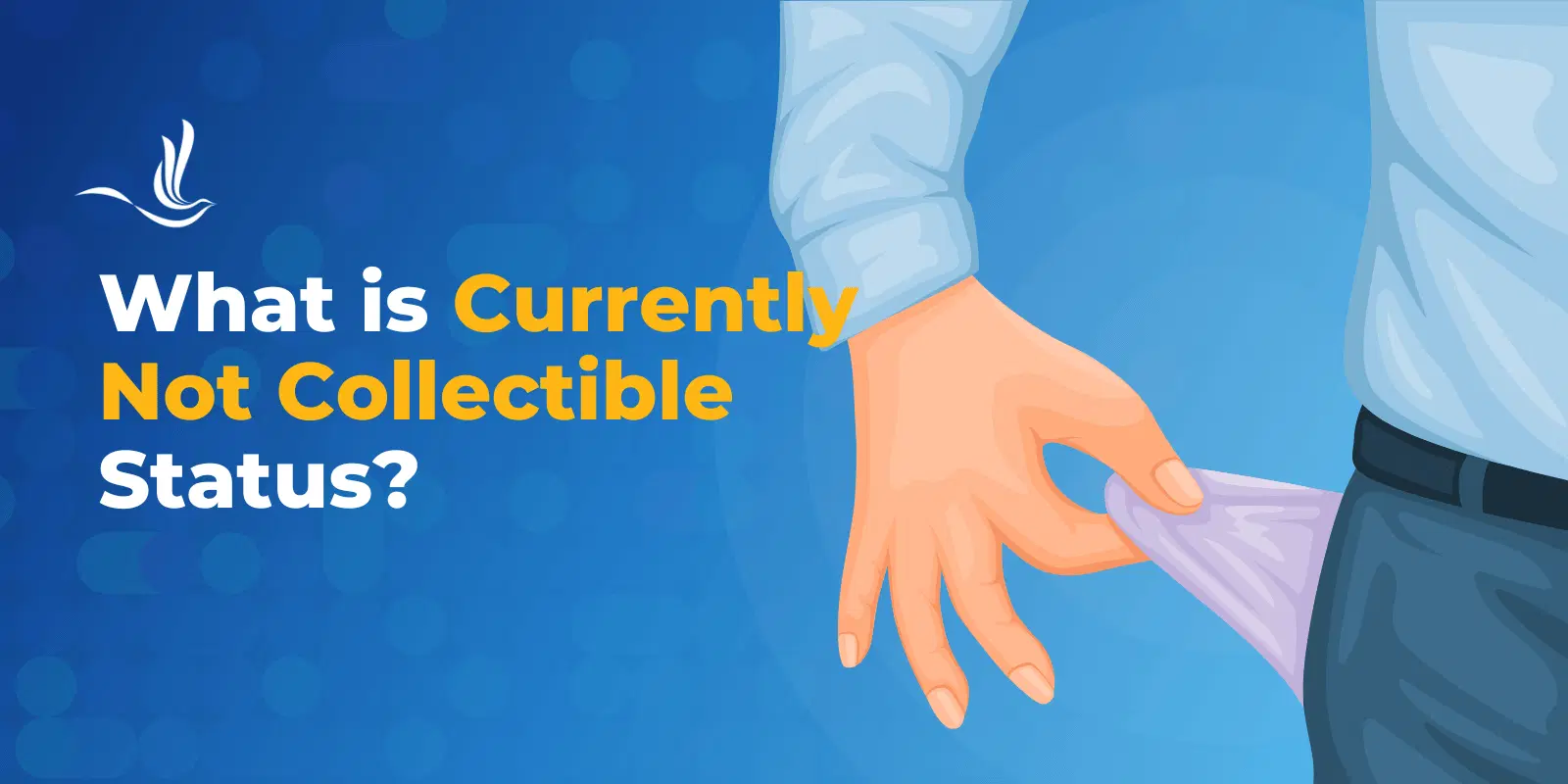
What is Currently Not Collectible Status?
Learn how IRS Currently Not Collectible status works, who qualifies, how to apply, what happens afterward, and common misconceptions.
Read More >If you can’t afford to pay your back taxes through an installment agreement, you may be eligible for IRS Currently Not Collectible (CNC) status.
Currently Not Collectible status means the IRS has determined that collecting your tax burden right now would cause financial hardship. While your account is in CNC status, the IRS temporarily pauses most collection actions, including wage garnishments and bank levies. A tax professional can help communicate this hardship to the IRS and ensure your account is coded correctly.

The IRS may place an account in CNC status when your income is needed to cover basic living expenses. If there’s no reasonable ability to make payments, collections are temporarily delayed.

CNC status is a hardship designation—not tax forgiveness. Your tax bill doesn’t reduce or disappear, but the IRS agrees to pause collection activity while you’re unable to pay. It is important to note that penalties and interest will continue to accrue on your total outstanding tax balance owed.

Currently Not Collectible status is not a permanent solution. If your financial situation improves, the IRS can and will reassess your account and resume collection efforts.
Before approving CNC status, the IRS typically requires a Collection Information Statement (Form 433-A, 433-F, or 433-B, depending on your situation). This form details your income, expenses, assets, and liabilities, and often requires supporting documentation such as pay stubs, bank statements, and proof of monthly living expenses.
Completing these forms accurately is critical. A tax professional can help advocate for your financial reality in light of the IRS’s allowable expense standards. In most cases, you must also be current with all required tax filings before the IRS will consider placing your account into Currently Not Collectible status. A tax professional can help identify and resolve any missing or unfiled returns before requesting hardship relief.
When applying for Currently Not Collectible status, the IRS may ask for supporting documents such as:
Having these records ready can make the process smoother. In some cases, if you don’t qualify for CNC, the IRS may still accept other forms of tax relief such as a Partial Payment Installment Agreement.
The timeline for a Currently Not Collectible (CNC) request can vary depending on your tax situation and how quickly the IRS receives and reviews your financial information. In many cases, the process can take weeks to be approved.
Delays often occur when documentation is missing or follow-up questions arise. While it’s possible to apply for CNC status on your own, working with a tax professional can help keep the process moving by ensuring forms are completed accurately with follow up questions anticipated and responding promptly to IRS requests.
Optima Tax Relief can help evaluate whether Currently Not Collectible status or another resolution option may apply to your case.
While most IRS collection activity is paused under Currently Not Collectible status, penalties and interest continue to accrue. The IRS may still file a Notice of Federal Tax Lien, and any future tax refunds can be applied to your outstanding balance. CNC status provides temporary relief, but it does not reduce or eliminate your tax debt.
CNC status is not permanent. The IRS periodically reviews your financial situation to determine whether you still qualify for hardship relief, including reassessing your income, expenses, and overall ability to pay. The IRS typically reviews your status every 1-2 years.
The IRS uses internal indicators to flag accounts for review. If your income increases or your financial circumstances improve beyond allowable living expenses, the IRS may remove your account from CNC status and request updated financials. Otherwise, the IRS may resume collection activity.
Many taxpayers use CNC status as a window to stabilize their finances and plan a long-term tax resolution. Keeping your financial information accurate and up to date is critical, especially if your income changes, and a tax professional can help monitor reviews and evaluate next-step options. Most importantly, they can help solve the core issues so you are compliant moving forward.
To request CNC status, you must show the IRS that paying your tax liability would create financial hardship. This determination is based on whether your income is needed to cover basic living expenses.
CNC requests typically involve submitting a Collection Information Statement (Form 433-A, 433-F, or 433-B) along with documentation detailing your income, expenses, assets, and liabilities.
While you can request CNC status on your own, many taxpayers work with a qualified tax professional. They can help ensure your information is well prepared and reduce the risk of delays or denials.
Frequently Asked Questions
Optima Tax Relief, LLC is a tax resolution firm independent from the IRS. This content is made available for informational and educational purposes only. Nothing included in the content should be taken as a guarantee, warranty, prediction, or representation about your specific situation. This content is not intended to be a substitute for professional advice and services. We encourage you to consult with a tax professional to discuss your specific tax matters. Individual results may vary. We do not provide tax, financial, bankruptcy, accounting, or legal advice and nothing contained in this content is intended nor shall be construed as such.
Learn how IRS Currently Not Collectible status works, who qualifies, how to apply, what happens afterward, and common misconceptions.
Read More >
IRS Installment Agreement vs. CNC status. Which one is right for you and your tax situation?
Read More >
The IRS is willing to negotiate, but only within the boundaries of formal relief programs. Discover which programs you qualify for.
Read More >Optima Tax Relief’s tax professionals are here to help with Currently Not Collectible (CNC) cases as well as a full range of tax relief services. Call and receive a free consultation with one of our tax associates today.
Free consultation
Call 1-800-536-0734 for a free consultation.